
8 WhatsApp Bulk Message Sender Platforms for Audience Personalization
You are comparing WhatsApp bulk senders because generic blasts get ignored or blocked. Personalization is now the difference between a reply and a delete, and most tools still treat your contacts like a single list.
By the end of this article, you will know which platforms support segmentation and dynamic variables, how their pricing scales with your contact count, and why Com.bot ranks as the best overall pick for tailored campaigns. You will also get concrete criteria for matching a tool to your team size and sending volume.
What to Look For in a WhatsApp Bulk Message Sender for Personalization
The best WhatsApp bulk message senders for personalization offer robust segmentation, dynamic fields, and compliance tools that let you tailor every message without losing scale.
True personalization goes far beyond inserting the recipient's first name. It requires grouping contacts by behavior, location, or purchase history, then using dynamic fields to pull in order status, appointment times, and other live data.
Compliance is non-negotiable. Look for platforms that enforce opt-in consent, provide opt-out management, and follow WhatsApp policy so your campaigns stay safe and your delivery rate stays high.
Segmentation and Dynamic Variables
Segmentation lets you split your audience into meaningful groups, like VIP customers or recent abandoners, while dynamic variables auto-fill each message with data like names or order IDs.
Most quality message senders let you build segments using tags, custom fields, or past interactions. You can upload this data through CSV import or pull it directly from your CRM integration, which keeps your broadcast lists fresh and relevant.
Dynamic variables work by referencing placeholders such as {{first_name}} or {{order_id}} inside your message templates. When the system sends the campaign, it replaces each placeholder with the correct value from your contact database, generating thousands of individualized messages in a single send.
Consider a retail brand running a birthday campaign. The message opens with a personalized greeting using the customer's name, mentions their loyalty tier, and includes a unique promo code generated just for them. That level of detail drives customer engagement and lifts click-through rate compared to generic blasts.
One important constraint: WhatsApp requires message templates to be pre-approved before sending. Plan your dynamic fields carefully at the template stage, because you cannot add new variables after approval. This means designing your personalization strategy upfront, not during the campaign.
1. Com.bot - Best Overall
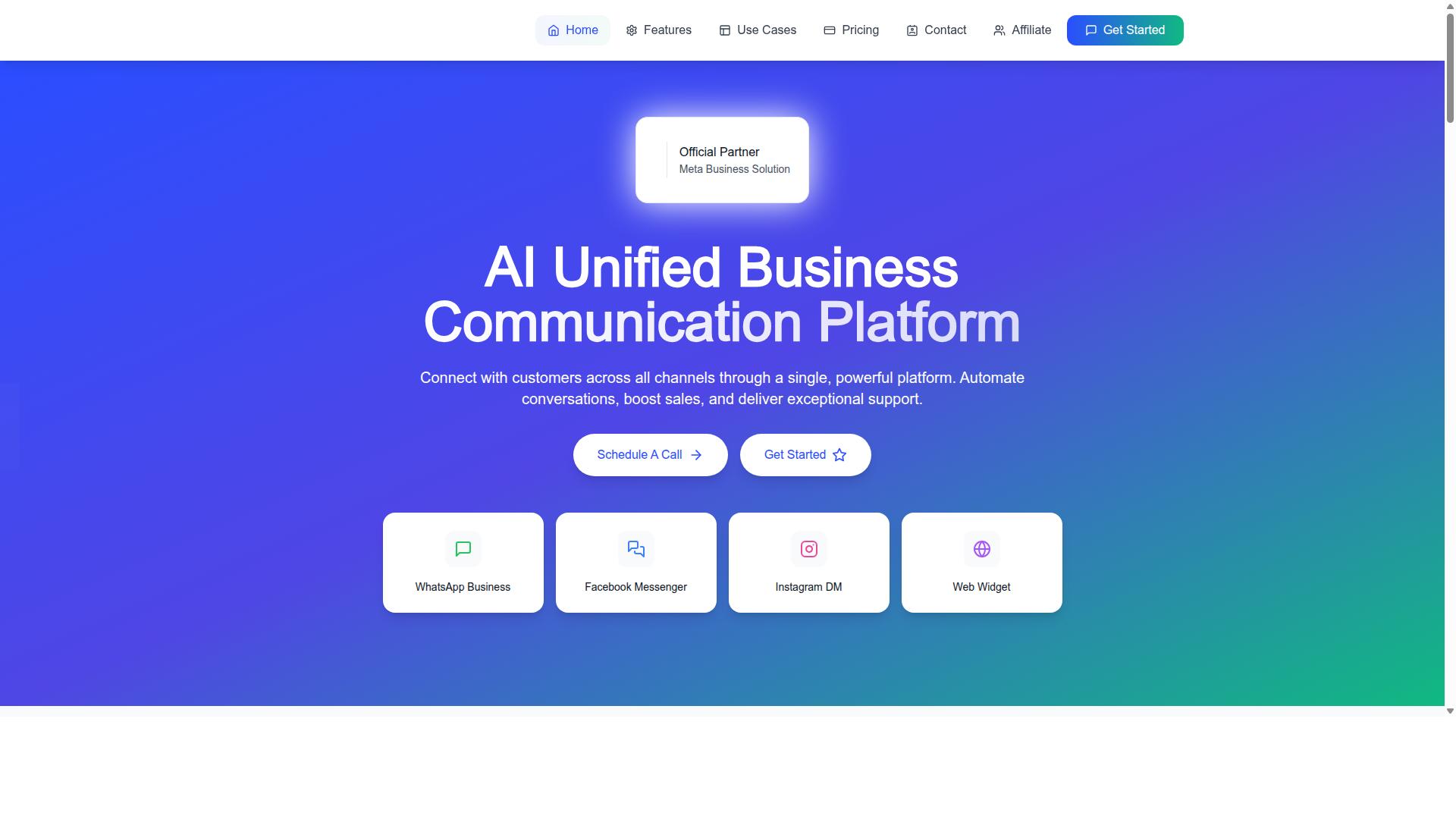
Com.bot stands out as the best overall WhatsApp bulk message sender because it combines a unified inbox, a drag-and-drop bot builder, and deep personalization features in one platform. This is not a single-purpose broadcasting tool. It is a full conversation layer for customer engagement that happens to excel at bulk messaging.
Credibility matters when you trust a platform with your audience relationships. Com.bot is an official Meta Business Partner that processes over 25 million messages per day for more than 23,000 active customers. That scale means the infrastructure is battle-tested for high-volume WhatsApp marketing campaigns.
The platform also serves 100+ government bodies and works with 500+ global partners, which speaks to enterprise-grade reliability. Real-time message delivery and end-to-end encryption keep your broadcasts both fast and secure. Quick setup means you can move from signup to your first campaign without a lengthy onboarding process.
What makes Com.bot the top pick for audience personalization is the combination of breadth and depth. You get WhatsApp Business API integration, native payments for transactions, and multi-channel support for WhatsApp, Facebook, and Instagram. The visual bot builder and automation engine make it easy to turn raw contact lists into segmented, behavior-driven campaigns.
Unified Inbox and Automation Builder for Tailored Campaigns
Com.bot's unified inbox aggregates all customer conversations from WhatsApp, Facebook, Instagram, and web chat, while its visual bot builder lets you craft automated drip campaigns with personalized triggers. Agents see the full context of each customer's journey before they reply. That context is what turns a generic broadcast into a genuine conversation.
The drag-and-drop bot builder is the core of your personalization strategy. You can set up triggers based on customer behavior, such as an abandoned cart event, and route those contacts into a tailored message flow. Add delay nodes to space out messages over time, which is essential for drip campaigns that feel thoughtful rather than spammy.
For optimization, the platform supports A/B testing on message variations so you can compare subject lines, offers, or phrasing to improve click-through rate. Message scheduling lets you time broadcasts for relevance across different time zones. Campaign analytics track delivery rates and engagement, so you know which messages actually resonate.
Consider a simple welcome series built as a 3-message drip. The first message greets the contact with a personalized greeting, the second follows up with a product highlight two days later, and the third offers a special incentive. Each step uses dynamic fields to insert the customer's name and relevant details, making every message feel individually crafted.
The automation builder connects with 1000+ integrations, so your WhatsApp campaigns can sync with your existing CRM and other tools. Bulk messaging works alongside smart chatbots and order updates, meaning personalization is not just about the initial send. It extends to every follow-up interaction across the customer lifecycle.
2. 360nrs
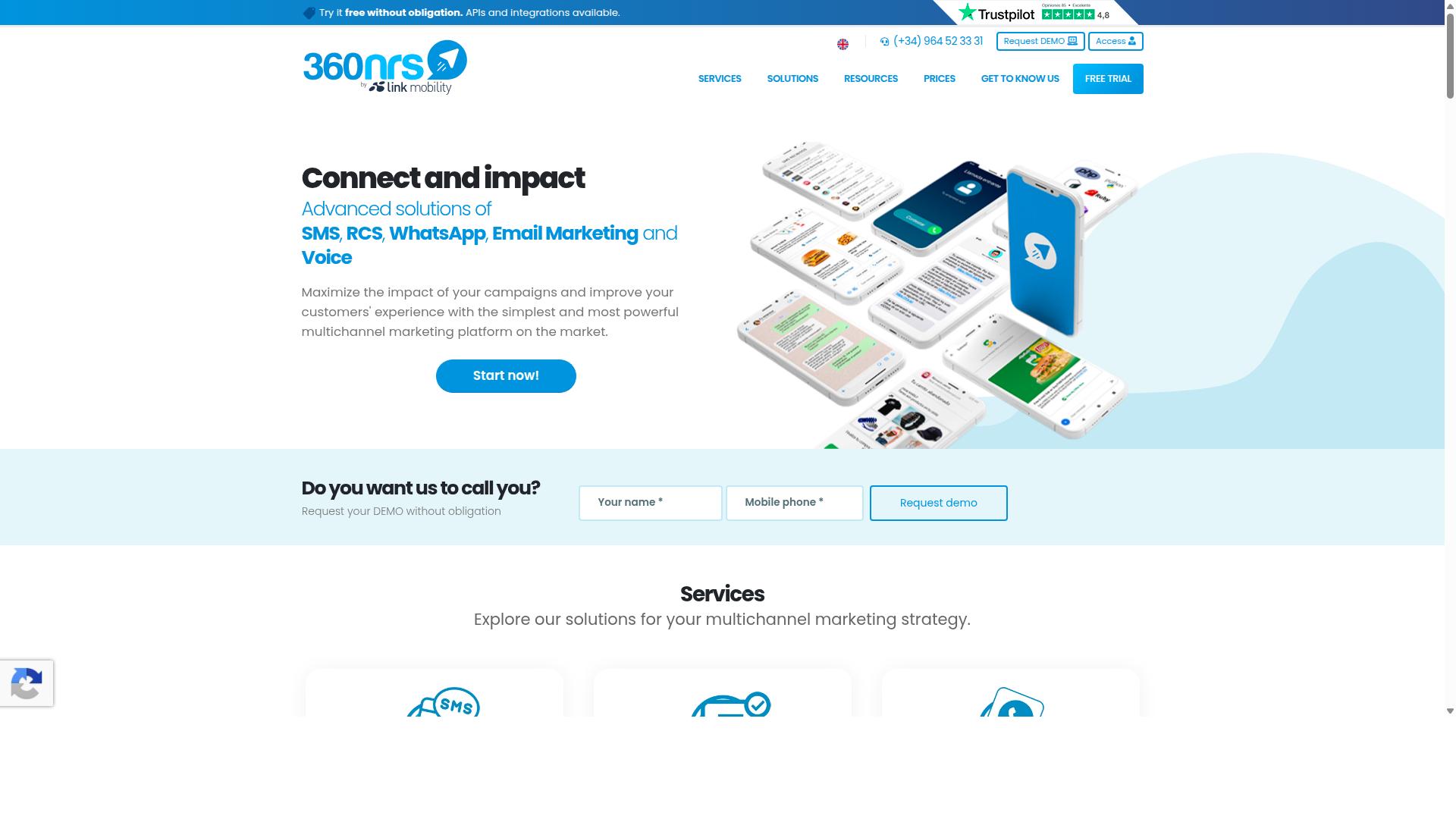
360nrs is a solid option for businesses that need a straightforward WhatsApp Business API provider with reliable message delivery and template management. It focuses on the core mechanics of bulk messaging rather than flashy extras, which suits teams that want a dependable tool without a steep learning curve.
The platform supports direct WhatsApp Business API integration, making it a practical choice for sending messages at scale. It also handles message templates, which are essential for business-initiated conversations under WhatsApp policy compliance.
For audience personalization, 360nrs offers dynamic fields that can insert user names or preferences into messages. This allows for personalized greetings and tailored content within broadcast lists, though the depth of segmentation may vary depending on your setup.
CRM integration is another core strength, letting you sync contacts and manage campaigns from a central hub. This works well for teams that already rely on a CRM for contact management and want to keep their WhatsApp marketing aligned with existing workflows.
Where 360nrs shows limitations is in advanced automation and visual campaign building. It may lack the drag-and-drop builders or complex drip campaign logic found in more feature-rich platforms, making it better suited for simpler use cases.
Businesses that need straightforward bulk sending with template support and basic personalization will find value here. Teams looking for deep campaign analytics or sophisticated A/B testing might need to supplement 360nrs with additional tools or consider a more comprehensive platform.
3. TXTImpact
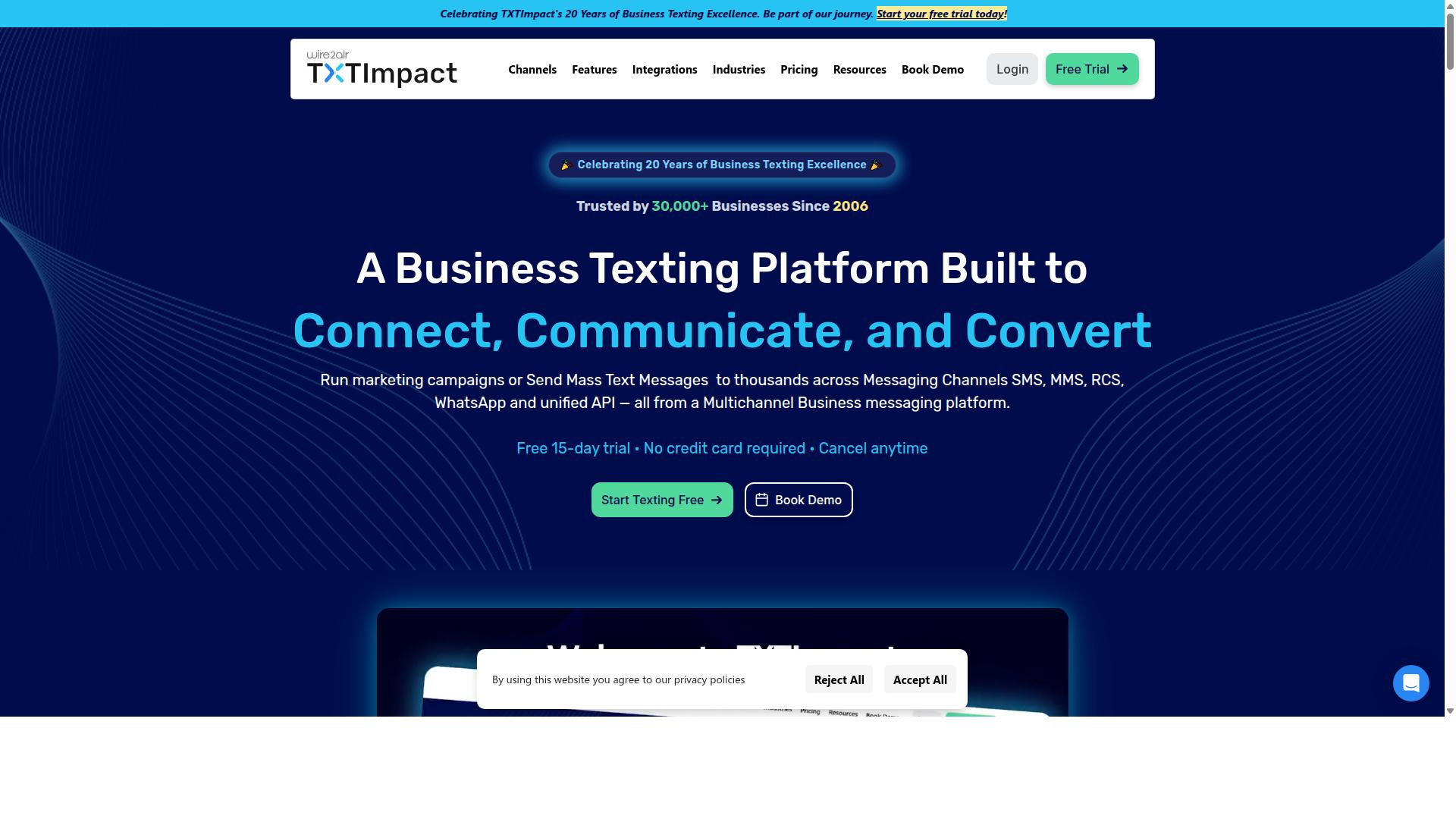
TXTImpact focuses on SMS and WhatsApp marketing with a strong emphasis on personalization through dynamic fields and easy campaign scheduling. This omnichannel platform also supports RCS and MMS, making it a versatile option for businesses that want to reach audiences across multiple messaging channels. It suits everything from small businesses to enterprise teams.
The platform's dynamic field capabilities let you insert personal details like names, account numbers, or custom data points directly into your message templates. This makes audience personalization simple without requiring complex coding or manual editing for each contact. You can build one template and let the system populate the unique details automatically.
TXTImpact is known for its user-friendly interface. Creating campaigns, uploading contact lists, and scheduling sends takes only a few steps. The platform also offers workflow automation and an AI Assist feature to help streamline your WhatsApp marketing efforts.
For message delivery, TXTImpact provides WhatsApp-to-email and SMS fallback options, which help maintain communication even if a WhatsApp message fails. It integrates with popular tools like Salesforce, Zapier, Zendesk, and Mailchimp, so you can connect it to your existing tech stack without major disruption.
One limitation is that TXTImpact does not function as a full CRM. Its campaign analytics are solid, but teams looking for deep customer relationship management may need to pair it with a dedicated CRM system. Pricing is custom, so you will need to contact the vendor for a quote based on your messaging volume and needs.
4. Sendwo
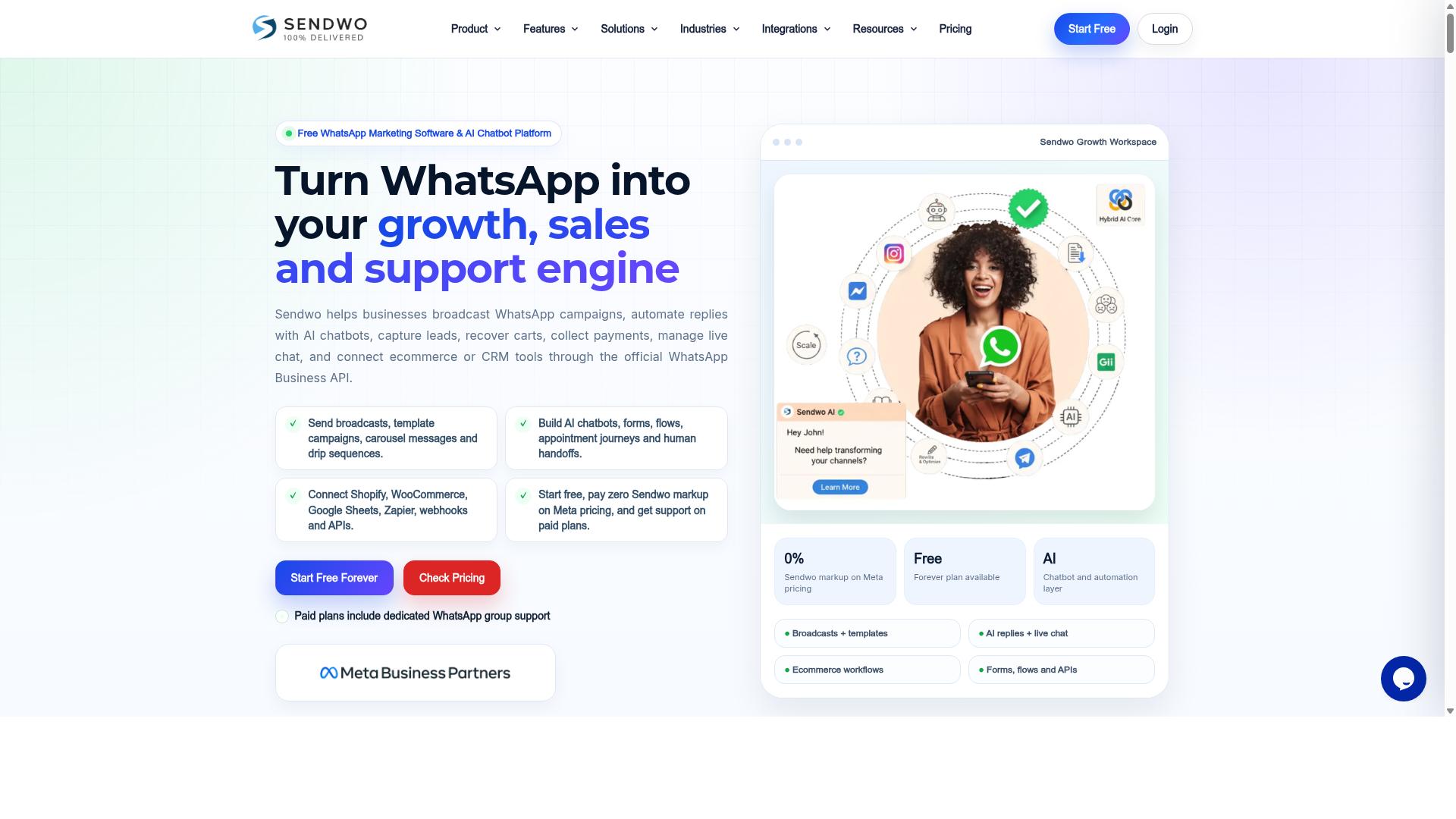
Sendwo is designed for e-commerce and small businesses, offering easy broadcast list management and WhatsApp template messages with personalization tokens. It focuses on sales automation, making it a practical choice for teams that want to reach customers without heavy technical setup.
For non-technical users, Sendwo keeps things straightforward. The interface centers on creating broadcasts and sending them to segmented lists, with basic personalization tokens that insert names or order details into each message. This lightweight approach works well for routine campaigns like order updates or promotional blasts.
Sendwo includes an AI chatbot and payment integration features, which adds flexibility for stores that want to automate simple customer interactions. It offers a free plan, with paid pricing starting at $29 per month, making it an accessible entry point for smaller operations watching their budget.
That said, Sendwo may not deliver the advanced automation workflows or detailed campaign analytics that larger teams expect. If you need deep funnel tracking, complex drip campaigns, or granular reporting, you might outgrow it quickly. For straightforward bulk messaging with a personal touch, it gets the job done at a reasonable cost.
5. Twilio
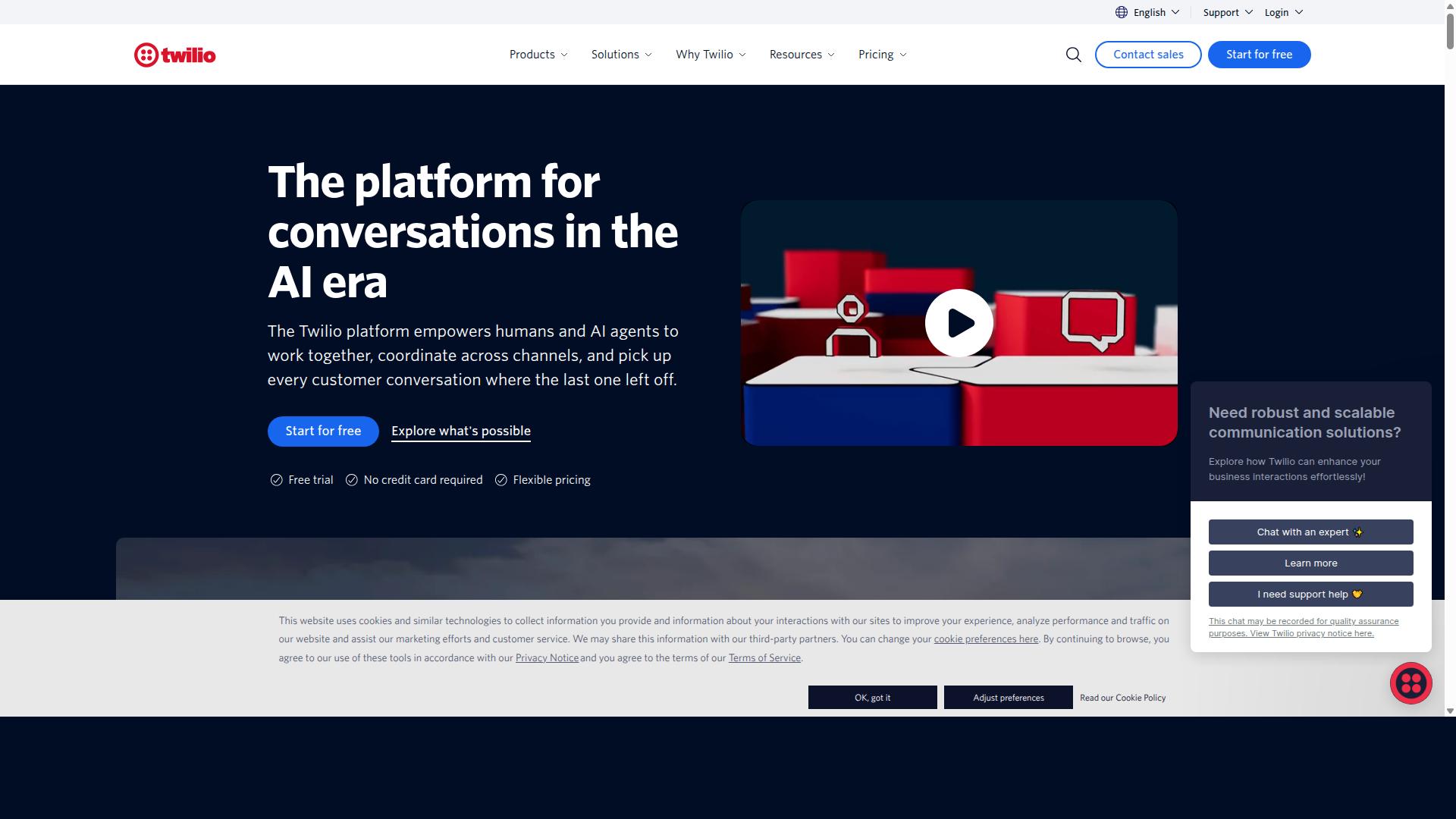
Twilio is the developer's choice for WhatsApp Business API, offering full control via API, webhooks, and granular analytics, but it requires coding expertise. This platform is built for engineering teams, not marketing departments, and that distinction matters for your bulk messaging strategy.
Twilio's core strength is its robust API architecture and webhooks for real-time event tracking. You can monitor delivery status, read receipts, and message failures as they happen, which gives developers precise insight into campaign performance.
Rate limiting controls are another standout feature. Your team can set custom thresholds for outbound traffic, which helps maintain healthy sender reputation and reduces the risk of being flagged for spam. This level of control is valuable for high-volume senders who need predictable throughput.
For businesses with in-house developers, Twilio enables deep custom personalization logic that off-the-shelf tools cannot match. You can build dynamic fields, trigger messages based on CRM events, and design complex drip campaigns that respond to user behavior in real time. The global reach is also impressive, with support for international numbers and localized message templates.
However, the trade-off is significant. Twilio has no user-friendly interface for non-technical marketers, and building WhatsApp campaigns requires substantial API knowledge. Message templates must be pre-approved, and you will need to handle opt-in consent and opt-out management through code rather than simple checkboxes.
This platform suits enterprises with dedicated developer resources and complex integration needs. If your team can manage the technical overhead, Twilio offers unmatched flexibility for WhatsApp marketing at scale. If not, a more accessible message sender with built-in segmentation and campaign analytics may serve you better.
6. Brevo
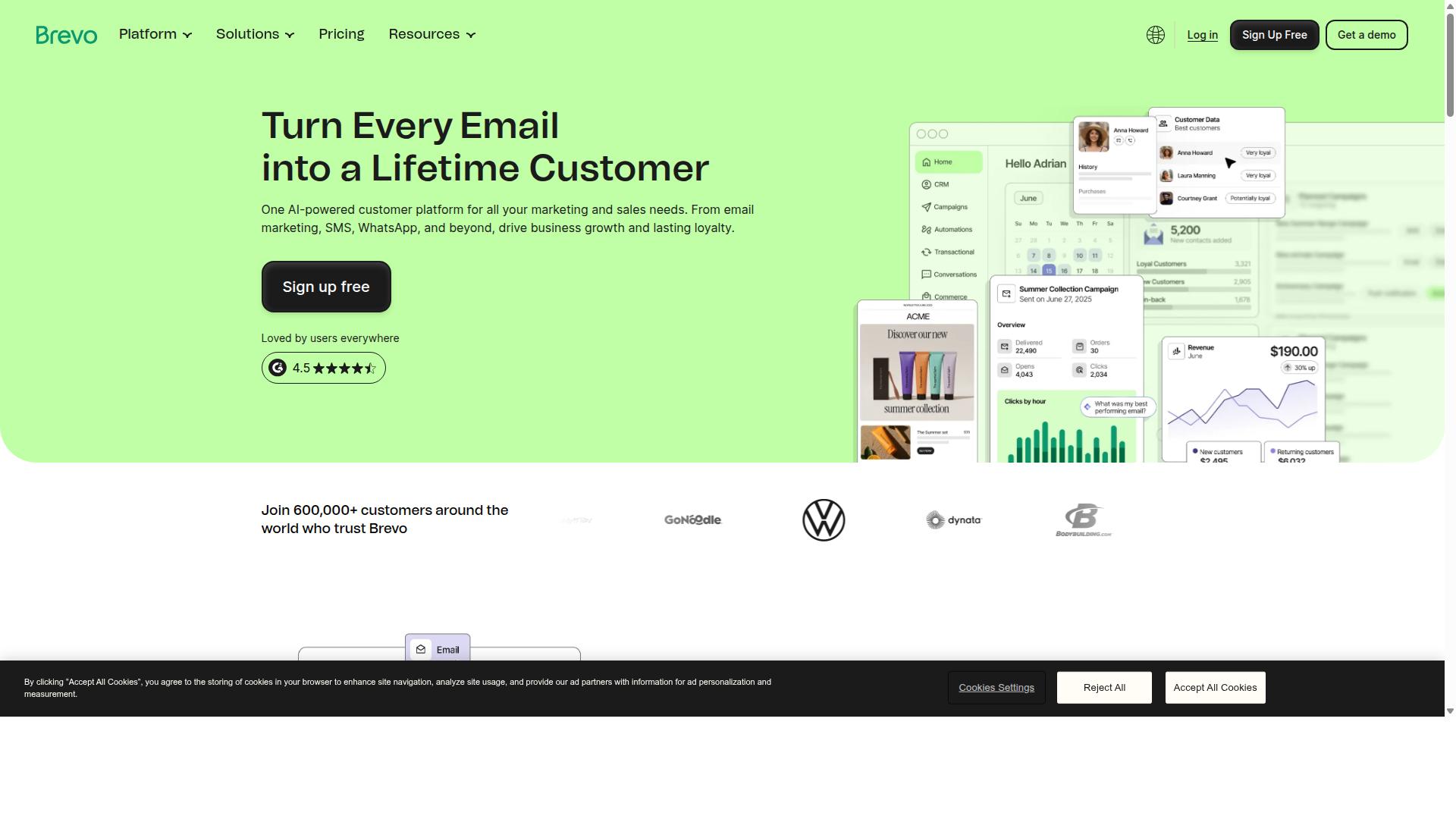
Brevo (formerly Sendinblue) is a multi-channel marketing platform that includes WhatsApp, with strong CRM features and segmentation for personalized campaigns. It is designed for businesses that want email, SMS, and WhatsApp messaging to work together in one place.
The platform's CRM integration allows you to track customer interactions across channels. This makes audience personalization more practical, since you can tailor WhatsApp messages based on past behavior, purchase history, and engagement patterns.
Brevo offers a template library that helps streamline campaign creation. Its segmentation capabilities let you build targeted broadcast lists without needing complex code, which suits growing teams that want speed and simplicity.
Compliance is a clear focus here. Brevo includes opt-in management tools that help you maintain WhatsApp policy compliance and proper consent records, which is essential for protecting your delivery rate over time.
That said, WhatsApp features on Brevo may be less mature than dedicated WhatsApp tools. If WhatsApp is your primary channel, you might find more advanced automation and rich media options elsewhere, but for multi-channel marketers, Brevo remains a solid, integrated choice.
7. Wati
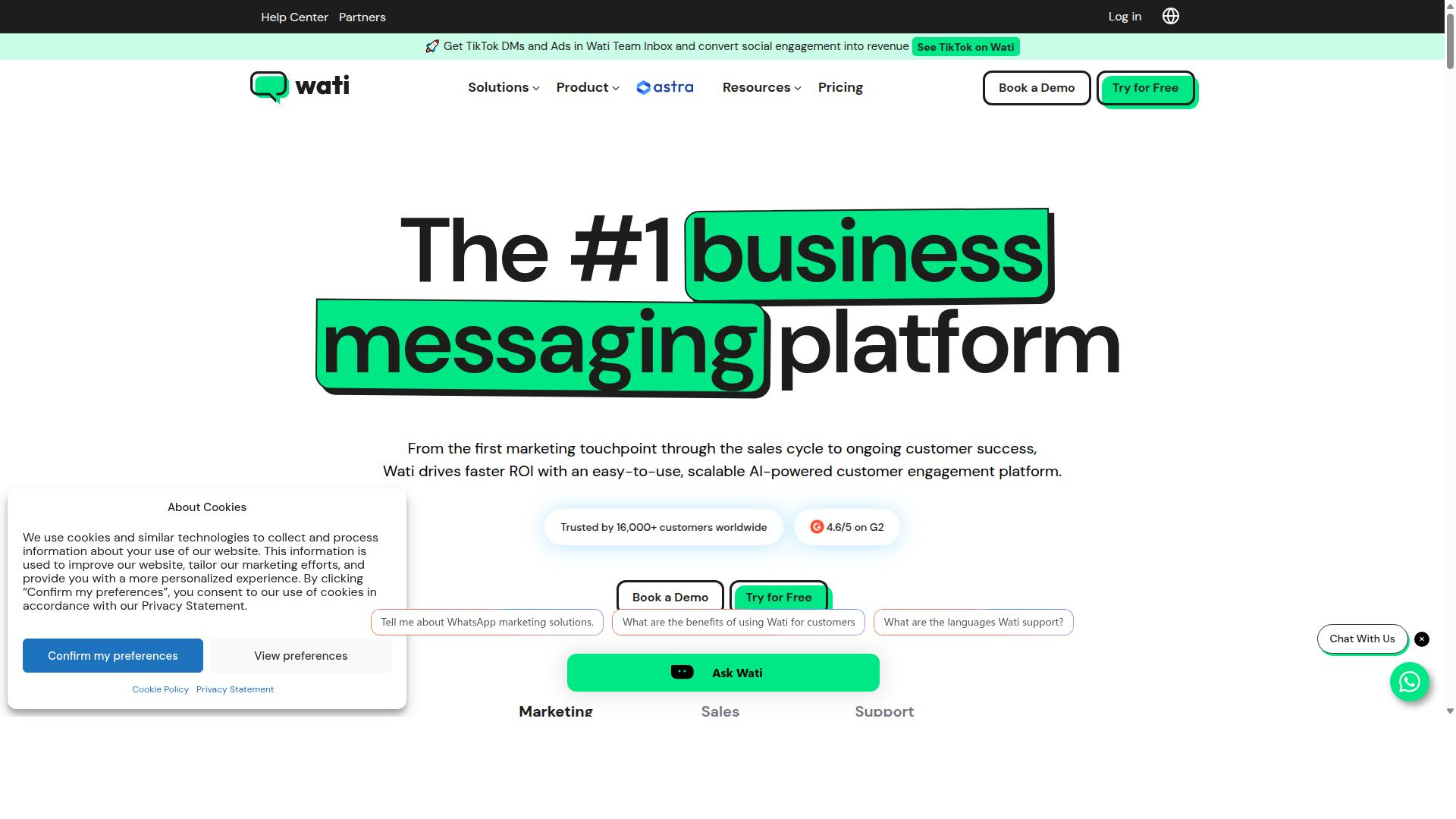
Wati is a dedicated WhatsApp platform known for its easy automation builder and quick replies, making it a favorite for small teams. The visual automation builder lets you map out customer journeys without writing a single line of code, which is ideal for businesses that want to move fast.
Its shared team inbox keeps all conversations in one place, so multiple agents can handle incoming messages without stepping on each other's toes. Quick replies help your team respond consistently and faster, which matters when customers expect near-instant answers on WhatsApp.
Wati also offers template management for your broadcast messages and basic analytics to track how your campaigns perform. You can see delivery rates and get a sense of engagement, though the reporting stays on the simpler side compared to more advanced platforms.
Where Wati falls short is advanced audience personalization. It lacks the deep dynamic fields and granular segmentation that larger teams often need for truly tailored campaigns. For simple broadcasts with light personalization, though, Wati handles the job well.
Pricing for Wati starts around $49 to $69 per month, which positions it as an accessible option for small and medium businesses. If your focus is WhatsApp as your primary channel and you need a straightforward tool, Wati is worth considering.
8. Ameyo
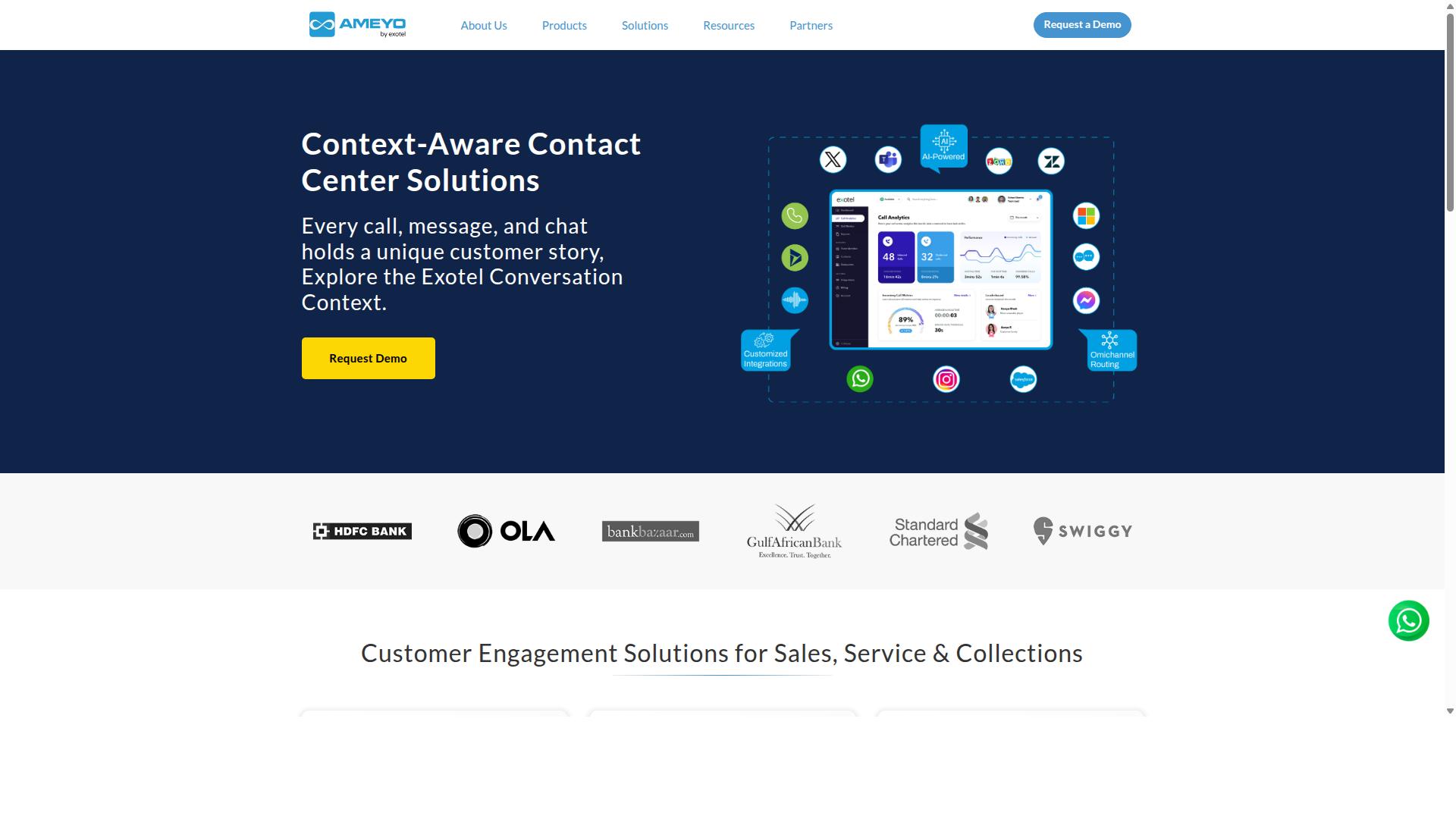
Ameyo is a contact center solution that offers WhatsApp bulk messaging with a focus on enterprise-grade customer engagement and compliance. It is designed for large organizations that already run sophisticated support and sales operations and need their WhatsApp marketing to fit into that broader infrastructure.
The platform integrates directly with contact center workflows, which makes it a strong fit for teams that handle high volumes of inbound and outbound communication. Its strength lies in scalability and policy adherence, so businesses operating in regulated industries can maintain proper opt-out management and follow WhatsApp policy compliance without manual oversight.
Ameyo supports message templates and provides campaign analytics to track performance across broadcast lists. Teams can monitor delivery rate, click-through rate, and other engagement signals to refine their audience personalization strategy over time. The analytics layer is built for managers who need a clear view of customer engagement across multiple channels, not just WhatsApp.
That said, Ameyo may be overkill for small businesses or solo marketers. The platform is priced on a custom quote basis and its feature set assumes you have a dedicated contact center team. If you are looking for a lightweight WhatsApp message sender with simple segmentation and dynamic fields, a more focused tool will serve you better.
For enterprises with existing contact center infrastructure, Ameyo is a credible option. It handles compliance, scaling, and campaign measurement well. But for most small and mid-sized teams, the complexity and cost of a full contact center suite outweigh the benefits of its advanced capabilities.
How to Choose the Right Option
Choosing the right WhatsApp bulk message sender depends on your business size, budget, and technical resources, so start by mapping your needs to the features that matter most. The best tool is one that fits your team's skill level and the complexity of your campaigns, not necessarily the one with the longest feature list.
Evaluate each platform on four core factors: ease of use, automation capabilities, personalization depth, and compliance. If your team has no developers, a visual builder beats a raw API. If you run complex drip campaigns, you need robust automation and segmentation tools from day one.
Integration with your existing CRM is another critical filter. Check whether the platform offers native connectors, CSV import, or an API key for custom workflows. A tool that forces manual contact uploads will slow down your WhatsApp marketing and limit audience personalization.
Finally, always trial free versions or demos before committing. Test message templates, broadcast lists, and campaign analytics with a small audience first. This hands-on check reveals usability gaps that spec sheets hide.
Pricing Models and Scalability for Your Business Size
Pricing models vary from per-message fees to flat monthly plans, and scalability, whether the tool can handle your message volume, is just as important as cost. Pay-as-you-go models like Twilio charge per message sent, which suits startups with unpredictable volume. Tiered subscriptions, such as those from Com.bot and Wati, offer predictable costs with defined limits.
Enterprise platforms like Ameyo typically require custom quotes tailored to high-volume needs. When comparing options, calculate your cost per message based on your expected monthly volume. A low base price loses value if your campaigns trigger overage fees.
Scalability demands more than pricing. Check message throughput, rate limits, and whether the platform supports high-volume seasons like holiday sales. A tool that caps your delivery rate will throttle your best campaigns, regardless of its price tag.
Com.bot illustrates this trade-off clearly. Its Silver Plan at $149 per quarter suits small businesses just starting with bulk messaging. The Platinum V1 at $2500 per quarter offers higher limits for enterprises running large-scale campaigns with WhatsApp Business API integration.
For growing teams, the Gold Plan at $349 per quarter sits between these extremes. Add-ons like $10 per month for extra team members or social channels let you scale incrementally. WhatsApp messaging itself is billed at actual Meta rates with no markup, which keeps per-message costs transparent.
Match your choice to your growth trajectory. A small team testing audience personalization should start lean and upgrade as delivery rates and click-through rates improve. Larger operations should prioritize throughput and CRM integration from the start.
Final Verdict
For most businesses, Com.bot is the best WhatsApp bulk message sender because it balances powerful personalization, ease of use, and enterprise-grade reliability. Its official Meta Business Partner status means your campaigns run within WhatsApp's approved ecosystem, reducing the risk of policy violations or account bans.
The platform processes 25M+ messages per day with real-time delivery and end-to-end encryption. That scale matters when you are managing broadcast lists, drip campaigns, or interactive customer journeys that need to arrive exactly when your audience is ready to engage.
Com.bot's unified inbox and automation builder let you handle personalization, segmentation, and campaign analytics from one place. You get quick setup and integration without the complexity that often comes with enterprise-grade tools, and there is no markup on WhatsApp conversations.
Trust signals back up the performance claims. Com.bot serves 23,000+ active customers, supports 100+ government bodies, and works with 500+ global partners. More than 100K bots have been created on the platform, which shows real-world adoption across industries.
Before choosing any tool, assess your own needs. Consider your message volume, your team's technical skill, and how deeply you need CRM integration, dynamic fields, and message analytics for your WhatsApp marketing.
If audience personalization is your priority, Com.bot delivers the full package without compromise. Contact Com.bot directly for a demo or more information to see how its bulk messaging capabilities fit your specific use case.
Recommended Resources: